
Fashion history – seeing it three ways!
There is something compelling about the history of fashion for me. It’s a bit like the pleasure to be had from people watching – it allows you to assess the sartorial choices of others from a distance. However, any good study of the history of fashion needs to go beyond the scrutiny of silhouettes and design details, these simply signify how fashions can change over time.
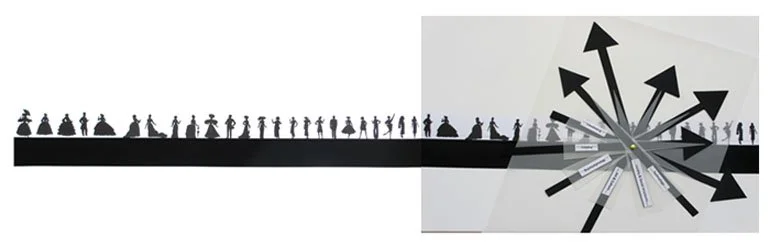
Fashion/Time/Change - three interconnected elements that, in combination, make fashion such a remarkable field.
These three elements work upon each other to make fashion something that is at once eternal and ephemeral. This trio combine in different ways to transform fashion, and I have been using a series of visual metaphors to explore their differing effects - the timeline / the assemblage / the ripple effect.
These graphic devices help to open up our understanding of fashion history, allowing the fashion-time-change combo to be used to examine fashion’s past in a range of different ways.
The standard fashion timeline (above left-hand side) depicts a narrow view of fashion-time-change, concerned specifically with stylistic changes of garments. It is useful and enlightening for beginners, but this singular chronology is often additionally restricted by its emphasis on Euro-Western and elite fashion styles. Whilst an attractive jumping-off point for this exploration, there is so much more to know about the transformation processes of fashion over time.
The assemblage (above right-hand side) is a way of understanding fashion-time-change at a particular moment, when multiple drivers of change converge on fashion. It does not attempt to span the time periods that the timeline does, rather it focuses on ‘a moment in time’ and lays out the broad cultural context that shaped the changes in fashion, at a specific time.
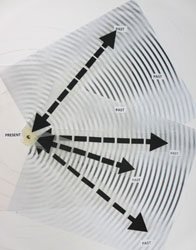
Finally, the ripple effect (visualised above) is a visual metaphor that proposes we consider our position in the present when looking back at the past; this provides an alternative subjective view on the past where things that once appeared certain can change. For example, that hair cut or dress that made us feel a million dollars in 1987 evokes different emotions standing in 2018 and looking back. This perspective is not defined by historical facts, rather it based on how we see and feel fashion-time-change through our lived experience.